

Kindergarten · Science · On Level
Free Science Review worksheet - version 19
Kindergarten science review matched to the learner's current level. This printable version includes 10 grade-appropriate questions and a separate answer sheet.
Science Review
Kindergarten · On-level practice · 10 questions · Version PG-1LA9QWZ-19ZJ
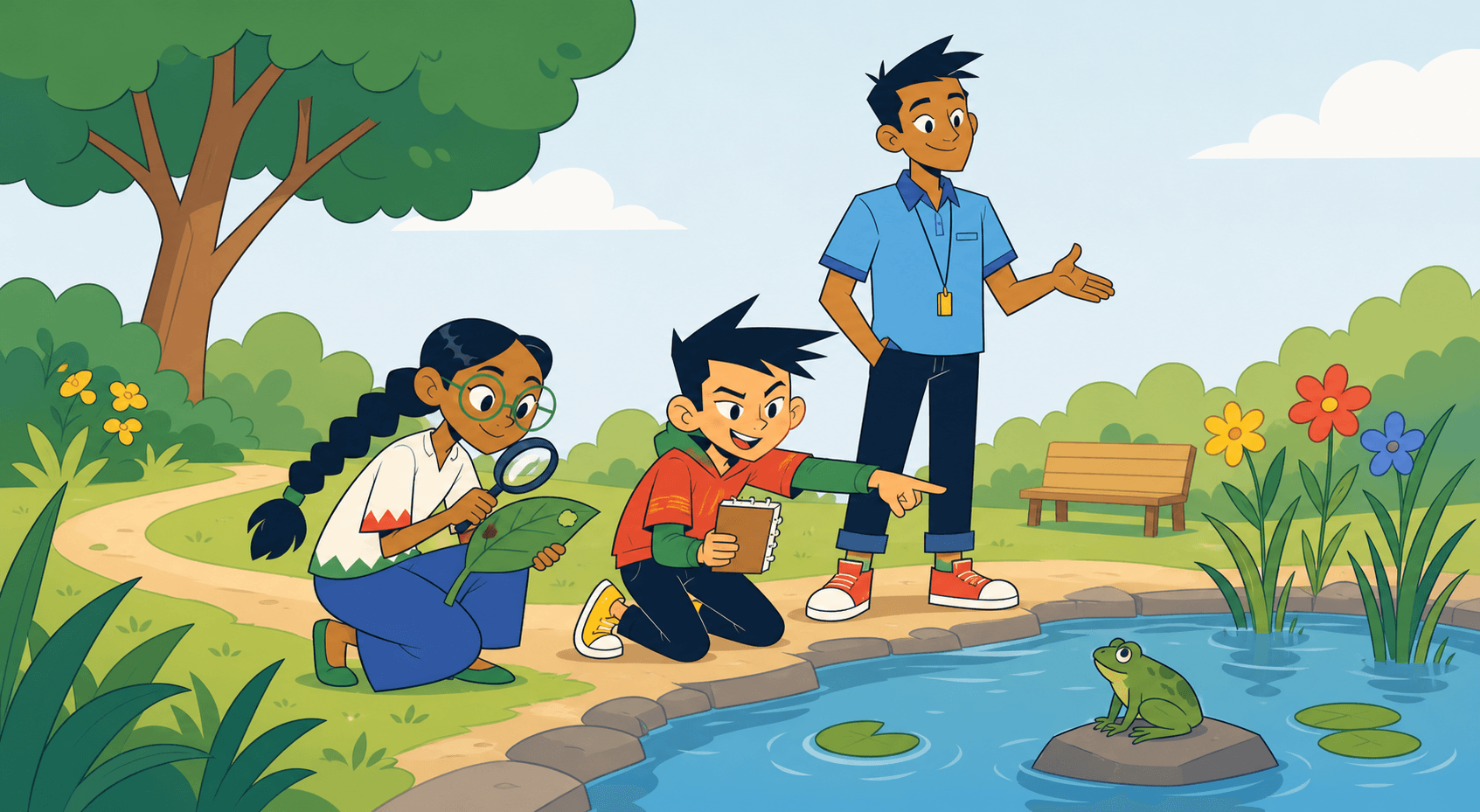
Name the star closest to Earth.A. Eyes B. Light C. The Sun
What do plants need from the sun?A. Light B. Iron C. Any plant or animal
Which animal begins life as a tadpole?A. Mammal B. A frog C. The Sun
Does the Moon make its own light?A. Liquid B. No C. Water and nutrients
What do magnets attract: iron or wood?A. Iron B. Liquid C. Hearing
What season comes after winter?A. Mammal B. Spring C. Gravity
What do birds use feathers for?A. Hearing B. No C. Warmth and flight
Which body part helps you see?A. Eyes B. Spring C. A frog
What force pulls objects toward Earth?A. Spring B. No C. Gravity
Is ice solid, liquid, or gas?A. Eyes B. Solid C. Wind
Answers and teaching notes
Use the answers to check the work after the learner finishes. For writing prompts, the guide describes what a strong response should include.
Show answers for version 19
- Name the star closest to Earth.The Sun
- What do plants need from the sun?Light
- Which animal begins life as a tadpole?A frog
- Does the Moon make its own light?No
- What do magnets attract: iron or wood?Iron
- What season comes after winter?Spring
- What do birds use feathers for?Warmth and flight
- Which body part helps you see?Eyes
- What force pulls objects toward Earth?Gravity
- Is ice solid, liquid, or gas?Solid
Worked example
Connect the question to an observable process or scientific model.
Common mistake
Selecting a familiar term without checking its meaning.
Helpful hint
Explain why your answer makes sense.