

Kindergarten · Reading · Building Confidence
Free Sequence & Inference worksheet - version 1
Kindergarten sequence & inference practice with original, difficulty-matched questions. This printable version includes 8 grade-appropriate questions and a separate answer sheet.
Sequence & Inference
Kindergarten · Building confidence · 8 questions · Version PG-3KQBVJ-1VAF
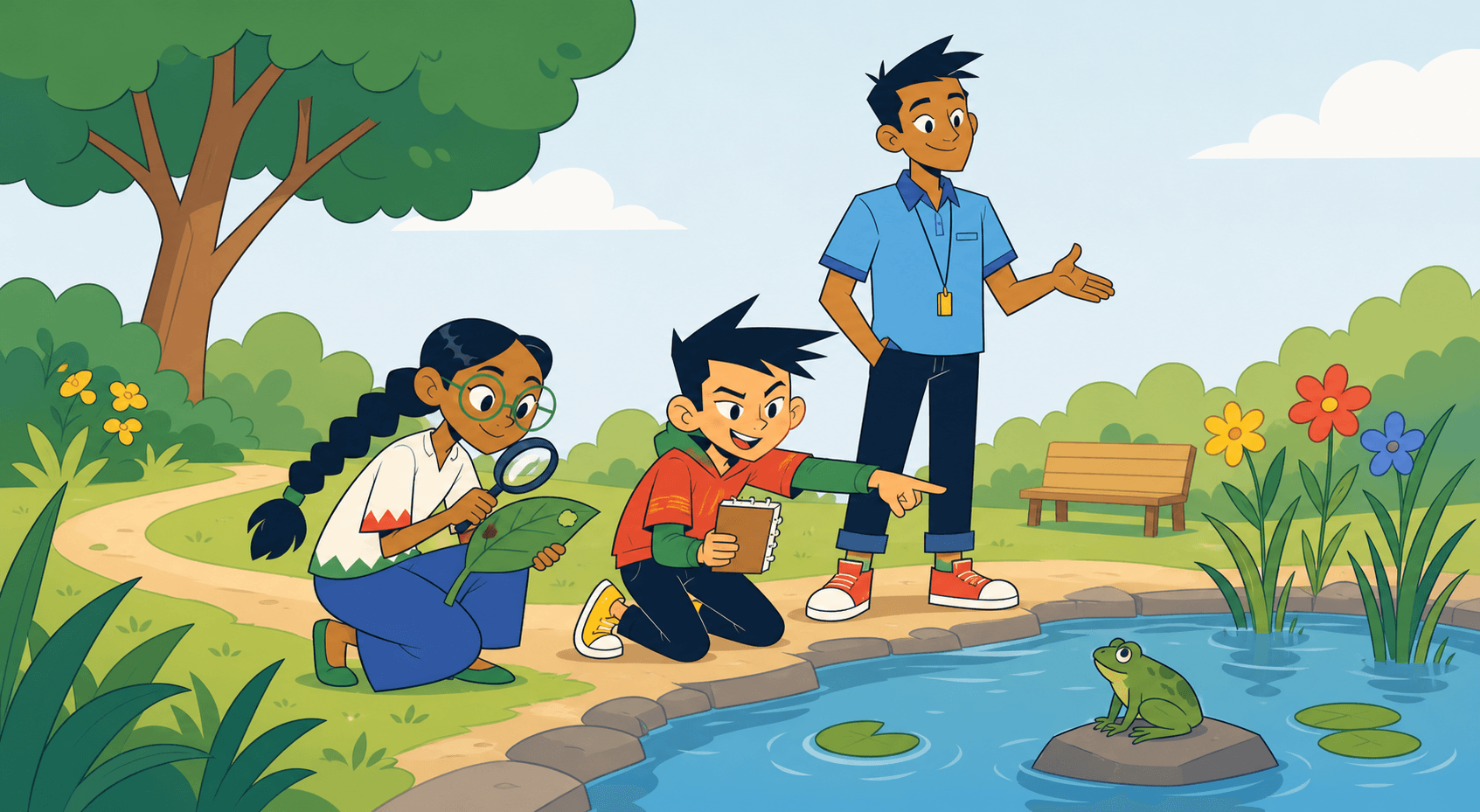
Read: “Ravi rehearsed his speech alone, then practiced for his sister. Her questions showed him which parts needed clearer explanations.” What happened first, and what can you infer?
Read: “Ava's paper bridge bent under six blocks. She folded the paper into ridges, and the new bridge held twelve blocks.” What happened first, and what can you infer?
Read: “Pine trees keep needle-shaped leaves in winter, but maple trees drop their broad leaves. Each strategy helps the tree conserve resources.” What happened first, and what can you infer?
Read: “The creek looked shallow near the bank but deepened toward the center. Maya used the marked bridge posts instead of guessing the water level.” What happened first, and what can you infer?
Read: “Nia and Theo walked to the pond. Nia watched quietly, but Theo splashed and frightened the ducks away.” What happened first, and what can you infer?
Read: “The library was crowded after school, so volunteers opened a second reading room. Families then found seats more quickly.” What happened first, and what can you infer?
Read: “Omar filled a blue pot with dry soil and a red pot with damp soil. Only the seed in the red pot sprouted.” What happened first, and what can you infer?
Read: “Milo packed a sandwich, while June packed fruit and crackers. Both children brought water for the hike.” What happened first, and what can you infer?
Answers and teaching notes
Use the answers to check the work after the learner finishes. For writing prompts, the guide describes what a strong response should include.
Show answers for version 1
- Read: “Ravi rehearsed his speech alone, then practiced for his sister. Her questions showed him which parts needed clearer explanations.” What happened first, and what can you infer?Ravi practiced alone. Inference: Some parts of the first speech were confusing.
- Read: “Ava's paper bridge bent under six blocks. She folded the paper into ridges, and the new bridge held twelve blocks.” What happened first, and what can you infer?Ava tested a flat paper bridge. Inference: The ridges helped spread the weight.
- Read: “Pine trees keep needle-shaped leaves in winter, but maple trees drop their broad leaves. Each strategy helps the tree conserve resources.” What happened first, and what can you infer?The passage describes pine needles. Inference: Leaf shape and leaf loss are both adaptations.
- Read: “The creek looked shallow near the bank but deepened toward the center. Maya used the marked bridge posts instead of guessing the water level.” What happened first, and what can you infer?Maya observed the creek. Inference: The creek's appearance could be misleading.
- Read: “Nia and Theo walked to the pond. Nia watched quietly, but Theo splashed and frightened the ducks away.” What happened first, and what can you infer?Nia and Theo walked to the pond. Inference: Nia probably saw the ducks for longer.
- Read: “The library was crowded after school, so volunteers opened a second reading room. Families then found seats more quickly.” What happened first, and what can you infer?The library became crowded. Inference: The library expected many after-school visitors.
- Read: “Omar filled a blue pot with dry soil and a red pot with damp soil. Only the seed in the red pot sprouted.” What happened first, and what can you infer?Omar prepared two pots. Inference: The blue pot did not have enough water.
- Read: “Milo packed a sandwich, while June packed fruit and crackers. Both children brought water for the hike.” What happened first, and what can you infer?Milo and June packed for a hike. Inference: They expected to become hungry and thirsty.
Worked example
Put stated events in order, then combine clues with what you already know.
Common mistake
Treating a guess as an inference without citing a clue.
Helpful hint
Find the clue that makes your inference reasonable.